
Great facts have a way of changing how we see the world. Here are 13 fun facts about Starfish, handpicked and verified by our editorial team. Some of these might genuinely surprise you — even if you think you already know the subject well.
Starfish don’t have any brains.
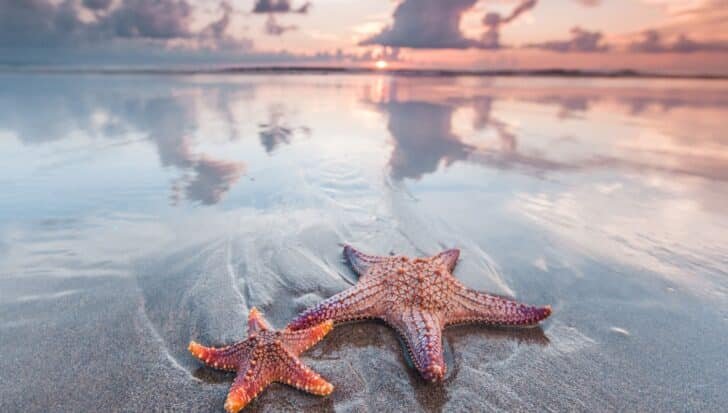
Rather than a centralized brain, starfish rely on a distributed nervous system where nerve rings and radial nerves run through each arm, allowing the creature to sense and react without any single command center.
This decentralized setup means each arm can gather information and respond to stimuli independently, making the starfish surprisingly efficient at navigating rocky seabeds and locating prey.
Their sensory cells detect light, pressure, and chemical gradients, giving them a well-rounded picture of the world around them despite never having a single thought.
Starfish have saltwater blood.
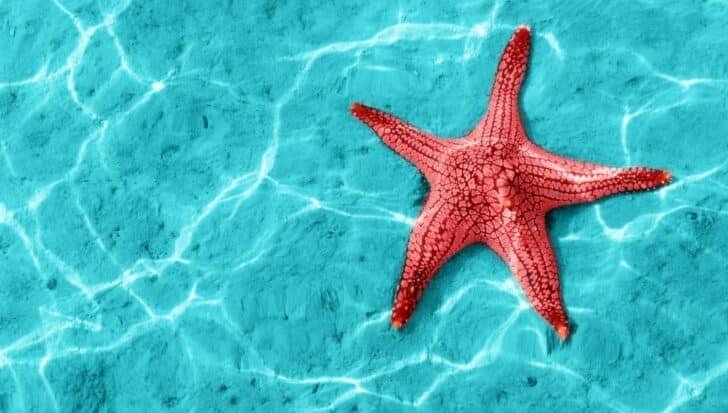
Instead of conventional blood, starfish use a water vascular system that circulates filtered seawater to deliver oxygen and nutrients throughout their bodies.
Seawater enters through a sieve-like structure called the madreporite, a small button-like plate visible on the upper surface, and then travels through a network of internal canals.
This elegant plumbing system powers their movement, feeding, and even gas exchange, all without a drop of actual blood.
Most Starfish can regrow their limbs.
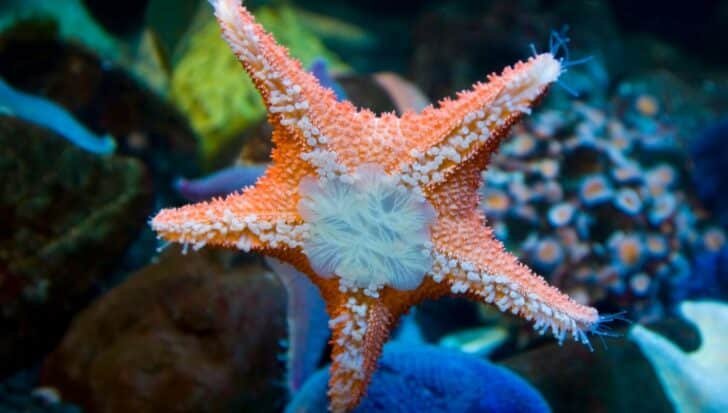
Starfish possess remarkable regenerative capabilities, able to regrow a lost arm over the course of several months, making them one of the most studied animals in the field of biological regeneration.
When threatened by a predator, many species can deliberately shed an arm through a process called autotomy, leaving the wriggling limb behind as a distraction while they escape.
Scientists study this regenerative ability hoping to unlock insights that could one day inform advances in human wound healing and tissue repair.
Starfish are not fish!
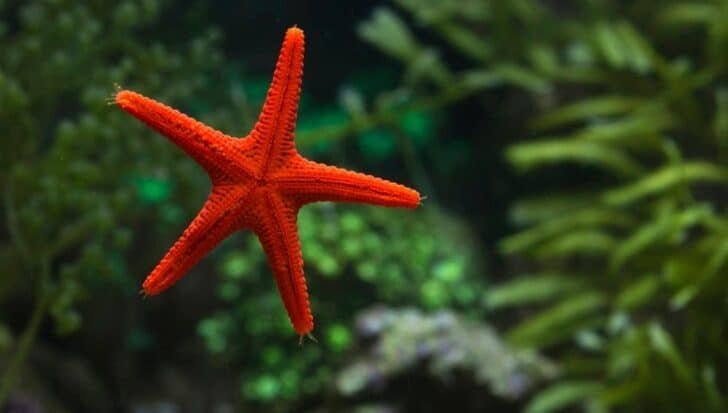
Starfish belong to the phylum Echinodermata and the class Asteroidea, placing them firmly in the company of sea urchins, sea cucumbers, and brittle stars rather than any true fish.
They lack gills, scales, and fins entirely — the defining features of actual fish — and are more closely related to sand dollars than to anything swimming in a school overhead.
Many scientists and educators now prefer the term “sea star” precisely to avoid the misleading suggestion that these spiny invertebrates have anything to do with fish.
Some other starfish reproduce by detaching their arms!
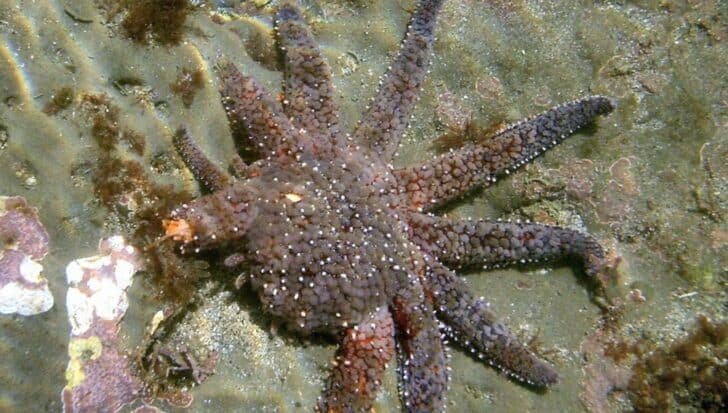
Certain species, such as Linckia multifora, practice a form of asexual reproduction called fissiparity, in which an arm separates from the body and develops into an entirely new individual.
These detached arms, nicknamed “comets” because of their trailing shape, slowly grow the missing central disc and remaining arms over the course of several months to a year.
They can digest food externally!

When a starfish encounters a clam or mussel, it wraps its arms around the shell and uses its tube feet to apply a steady, persistent pull that can pry the two halves apart by even a fraction of a millimeter.
That tiny gap is all the starfish needs — it ejects its cardiac stomach outward through its mouth and into the shell, secreting digestive enzymes that break down the prey’s soft tissue into a liquid soup.
The stomach then absorbs the nutrient-rich fluid before being retracted back into the body, leaving behind nothing but an empty shell.
Starfish have eyes on the tips of their arms.
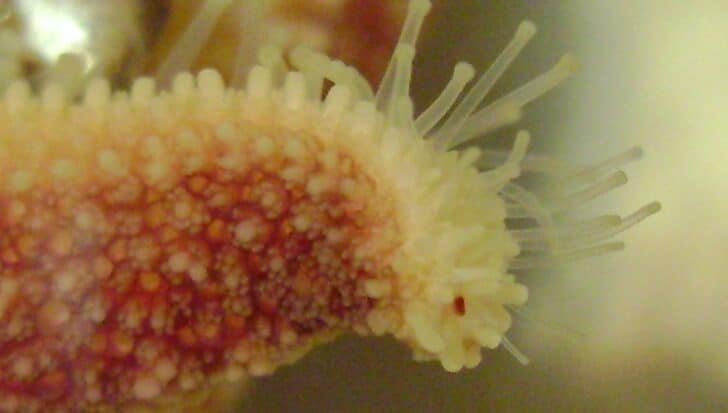
At the very tip of each arm sits a small but functional photoreceptive organ called an ocellus, essentially a simple eye capable of distinguishing light from darkness and detecting basic shapes and structures.
While far from sharp vision, these eyespots help starfish navigate toward reef structures and avoid the open water where they would be more vulnerable to predators.
Some deep-sea starfish glow in the dark.
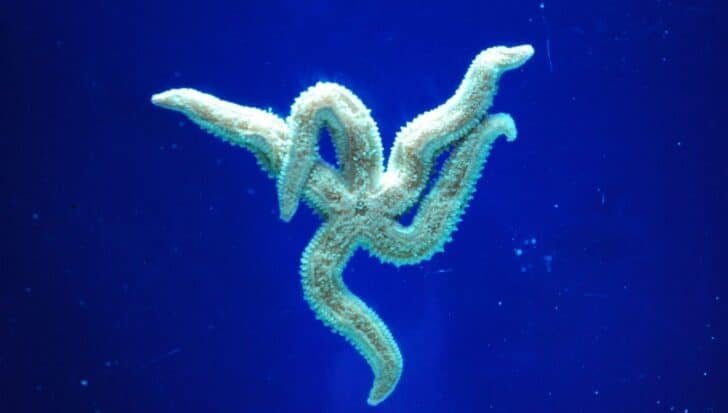
In the pitch-black depths below 300 meters, sunlight cannot penetrate, so some starfish species have evolved bioluminescence — producing their own cold blue-green glow through chemical reactions within their tissues.
Deep-sea species such as Henricia and others have been observed emitting faint but steady light, which may serve roles in communication, attracting prey, or deterring would-be predators.
Their eyes are also more developed than those of shallow-water relatives, fine-tuned to pick up the faintest glimmers of biological light in the surrounding darkness.
Starfish walk around on their taste buds!
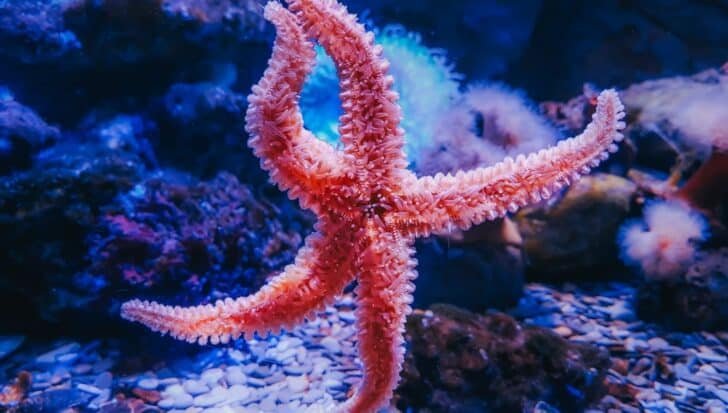
The hundreds of tiny tube feet lining the underside of a starfish’s arms are tipped with chemoreceptors — cells that detect chemical signals in the water — effectively letting the starfish taste whatever surface it walks across.
These same feet also serve as suction cups that grip rocks and shells, hydraulic legs that power movement, and even extensions for capturing drifting food particles.
In some species, waste is expelled through small pores at the tips of tube feet, meaning the very structures used for tasting and walking double as excretory outlets — a multi-purpose system that is as practical as it is unusual.
There’s a reason they’re symmetrically star-shaped.

Starfish exhibit pentaradial symmetry, meaning their bodies are organized around a central point with five repeating sections radiating outward, though some species carry as many as 40 arms.
This body plan allows them to approach food and sense their environment equally well from any direction, a significant advantage for an animal that has no distinct front or back.
The more arms a species has, the greater its surface area for sensing, gripping, and feeding, which explains why some large deep-water species have evolved so many extra limbs.
Starfish have adapted perfectly to their environments.

Across more than 2,000 known species, starfish display an extraordinary variety of colors, textures, and proportions, each combination tailored to a specific habitat and lifestyle.
Vivid reds and oranges often signal toxicity to potential predators, while muted browns and grays allow intertidal species to blend seamlessly into sand and rock.
Arm shape varies too — slender arms suit species that hunt in crevices, while broad, cushion-like arms are ideal for starfish that smother prey on open reef flats.
Their tough, spiny skin protects them from larger predators.

The outer surface of a starfish is covered in calcium carbonate ossicles — interlocking plates embedded in tough skin — that form a flexible yet formidable suit of natural armor.
Many species also sport pointed spines or pedicellaria (tiny pincer-like structures) that actively grab and deter parasites and small creatures that attempt to settle on their surface.
Some species, like the crown-of-thorns starfish, take defense further by incorporating venom into their spines, making any predator’s bite an instantly regrettable decision.
Starfish play a vital role in marine ecosystems.
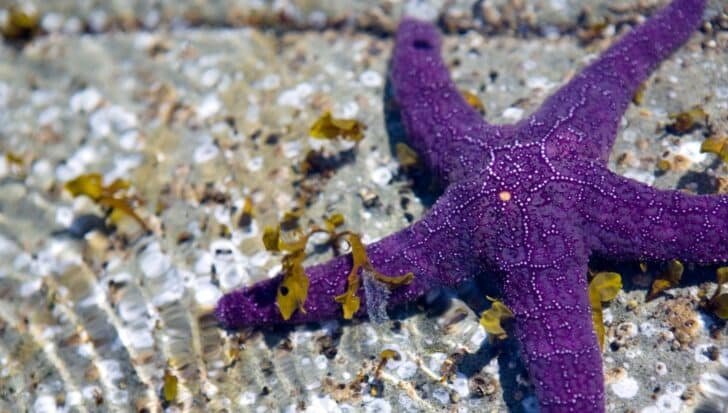
Starfish are classic keystone predators, meaning their impact on ecosystem structure is disproportionately large relative to their own numbers — remove them, and the balance of entire reef communities can collapse.
By keeping mussel and urchin populations in check, sea stars prevent any single species from monopolizing the rocky intertidal zone and crowding out the biodiversity that other marine animals depend upon.
Their foraging activity also physically disturbs the seafloor, turning over sediment and creating microhabitats that smaller organisms rely on for shelter and feeding.
The deeper you dive into the world of starfish, the more you realize just how clever and unusual they really are.
Everything about them, down to their very shapes and colors, is perfectly suited to life underwater.
They might not look or act like most animals we know, but that’s exactly what makes them so fascinating.
Starfish truly are one of the ocean’s most incredible success stories!
Final Thoughts: Starfish is genuinely full of surprises, and we’ve only scratched the surface here. We hope you walk away from this list knowing something new. Share your favorite fact with a friend, and check out more curated fact lists on Kaleeg when you’re ready for more.




 ↑
↑