
The guitar is one of the most versatile and beloved instruments on the planet — but how much do you really know about it? Here are 15 groovy guitar facts that might just change the way you hear your favourite songs.
Not all guitars have six strings.

While the six-string guitar is the standard most people picture, guitar family members come in a wide range of string counts. Twelve-string guitars are popular for their rich, chorus-like sound, while seven- and eight-string guitars are common in metal for their extended low range.
Double-necked guitars — famously used by Jimmy Page and Slash — effectively combine two guitars in one body, often pairing a six-string neck with a twelve-string neck for maximum sonic versatility on stage.
Guitar strings weren’t always steel or nylon.
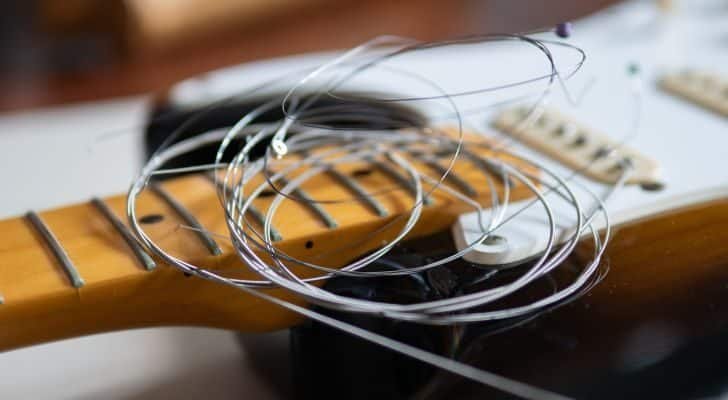
Before the twentieth century, guitar strings were typically made from gut — specifically the intestines of sheep, goat, or cattle, never cat, despite the misleading name “catgut.” These strings produced a warm, mellow tone well suited to the classical and folk music of the era.
Steel strings became widespread in the early 1900s as players sought greater volume and brightness, particularly for country and blues. Nylon strings, introduced in the 1940s, replaced gut for classical guitarists and remain the standard for that genre today.
You can play the guitar upside down.

Jimi Hendrix is the most famous example of a left-handed guitarist who played a right-handed guitar flipped upside down, restringing it so the strings ran in the correct order from low to high. This meant the body contours and controls were in unconventional positions, yet Hendrix made it work with extraordinary results.
Other notable left-handed players, including Kurt Cobain and Paul McCartney, simply sought out left-handed guitars — but Hendrix’s solution became one of the most iconic images in rock history.
You can also play the guitar while it’s lying down.
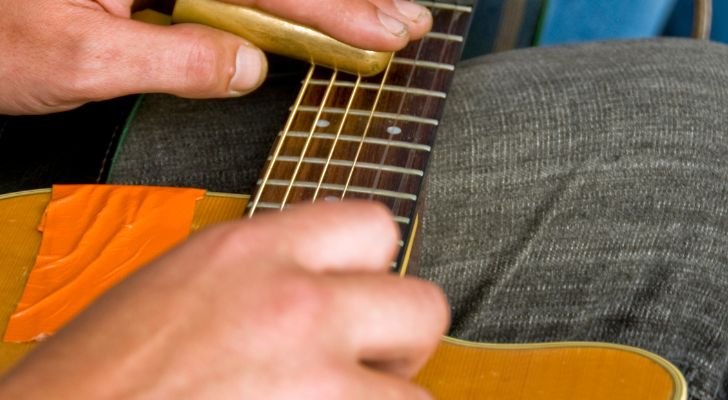
Lap steel guitar is a style in which the instrument rests horizontally across the player’s knees, with a metal or glass slide used to fret the strings rather than the fingers pressing down on a fretboard. It’s a defining sound of Hawaiian music and early country blues, producing that distinctive, fluid wailing tone.
A related technique called “tap guitar” or “touch-style guitar” — popularised by players like Stanley Jordan — involves tapping both hands directly onto the fretboard while holding the guitar normally, essentially turning it into a two-handed percussion-melody instrument.
The hole found in acoustic guitars makes them sound better.
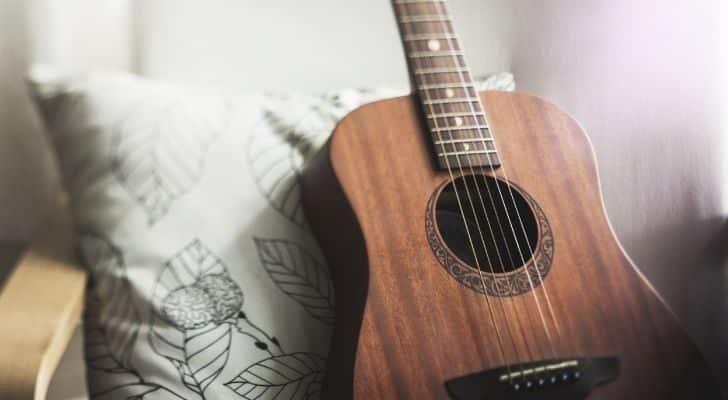
The circular opening on the face of an acoustic guitar is called a soundhole, and it works alongside the hollow body to project and amplify the vibrations of the strings into the surrounding air. Without it, the guitar would still produce sound, but it would be noticeably quieter and more muted.
Semi-acoustic and feedback-resistant guitars sometimes use a solid or partially covered top, sacrificing some volume in exchange for reduced feedback when performing at high stage volumes. Soundhole covers are also available as clip-in accessories for players who need to control unwanted resonance.
There are special holidays dedicated to guitars.

Guitar enthusiasts have carved out several days on the calendar to celebrate their instrument. National Guitar Day falls on February 11, encouraging players of all levels to pick up their instruments and share the joy of playing, while International Guitar Month takes place throughout all of April.
National Electric Guitar Day on November 27 specifically honours the invention that revolutionised popular music, and there’s even a Hug a Bassist Day on November 13 — a nod to the often unsung heroes who hold the rhythm section together alongside the drummer.
Bending guitar strings can change their pitch.
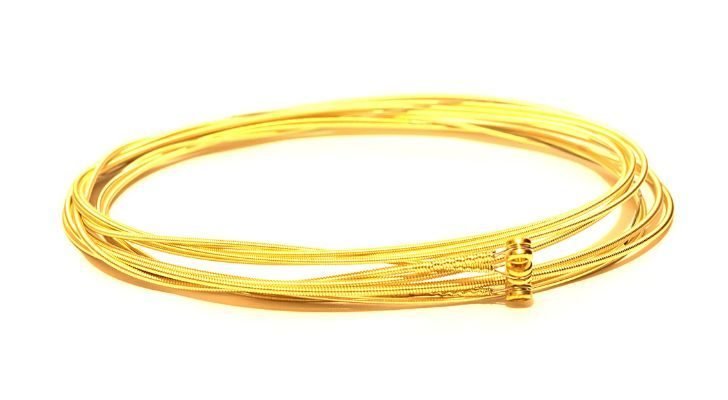
String bending is a core expressive technique in blues, rock, and country guitar — pushing or pulling a string sideways across the fretboard increases its tension, which raises its pitch in a smooth, vocal-like glide rather than the discrete jump you get by moving between frets. A full-step bend raises the note by a whole tone; a half-step bend by a semitone.
Blues legends like B.B. King made bending central to their sound, using it to mimic the phrasing of a human voice. Frets, for those new to the instrument, are the thin metal strips embedded across the guitar’s neck that divide it into playable pitch intervals.
A capo is used for raising the guitar’s pitch.
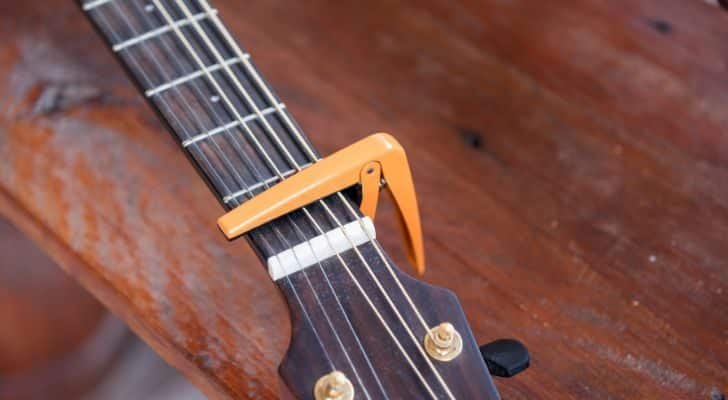
A capo is a clamp-like device that attaches to a guitar’s neck and presses all the strings down at a chosen fret, effectively shortening the vibrating length of every string at once and raising the overall pitch of the instrument. This lets a guitarist play open-chord shapes in any key without having to learn a whole new set of fingerings.
Capos are widely used in folk, pop, and singer-songwriter music — you’ll hear them on countless classic recordings. They’re generally avoided in jazz and traditional classical guitar, where precise intonation and complex chord voicings are achieved without them.
Slide guitar is a technique used in blues music.
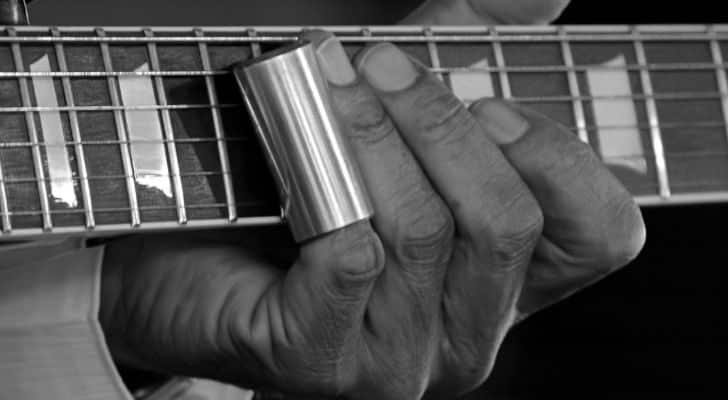
Slide guitar involves pressing a hard, smooth object — traditionally a glass bottleneck or a metal cylinder worn on a finger — against the strings and gliding it up and down the neck. The result is a continuous, microtonal pitch variation that standard fretted playing cannot achieve, giving the technique its distinctive, singing quality.
The style is deeply rooted in the Mississippi Delta blues tradition, associated with artists like Robert Johnson and Elmore James. It carries over naturally into lap steel playing, and dedicated lap steel guitars — with a higher action and often different tuning — are purpose-built for the technique.
The pickup is what makes electric guitars work.
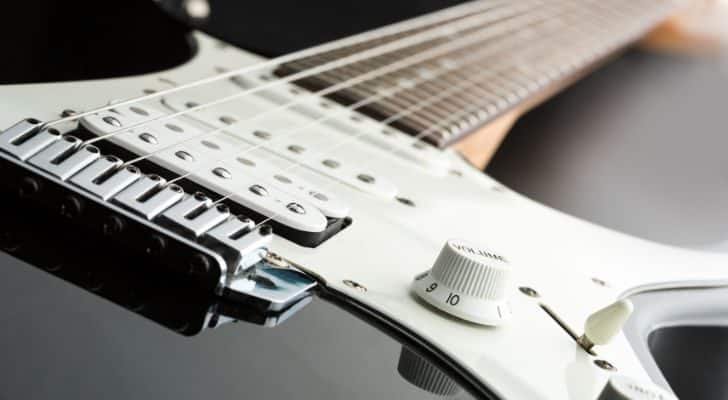
Guitar pickups are electromagnetic devices mounted beneath the strings that detect the vibrations of the steel strings as disturbances in a magnetic field and convert them into an electrical signal. That signal travels through a cable to an amplifier, which boosts it and drives a speaker to produce sound.
Different pickup designs — single-coil, humbucker, P-90 — each have distinct tonal characteristics, which is why swapping pickups is one of the most popular modifications guitarists make. An electric guitar can technically be played without an amplifier, but the unamplified output is so quiet it’s really only practical for silent practice.
A violin bow can be used on guitars.
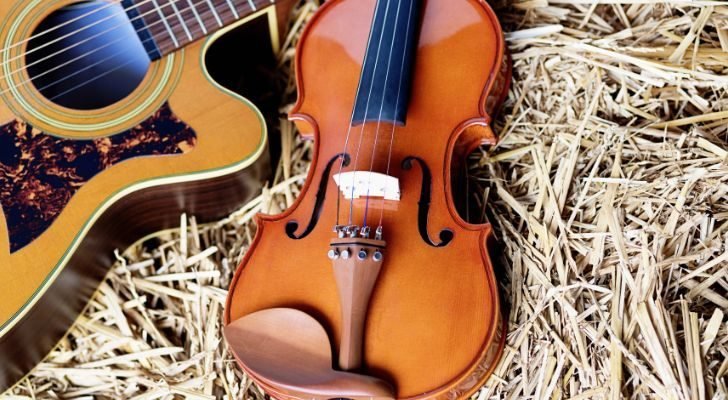
Drawing a rosin-coated violin bow across guitar strings produces a sustained, eerie tone quite unlike anything a plectrum or fingers can achieve — the bow sets the strings into a continuous vibration rather than a single plucked impulse. The technique is tricky on a standard guitar because the flat bridge makes it difficult to bow individual strings cleanly.
Despite those challenges, bowed guitar has found a home in experimental and rock music; Jimmy Page famously used a cello bow on a guitar during live performances of “Dazed and Confused,” and Icelandic post-rock band Sigur Rós have built much of their signature sound around the technique.
The type of wood used can affect a guitar’s tone.
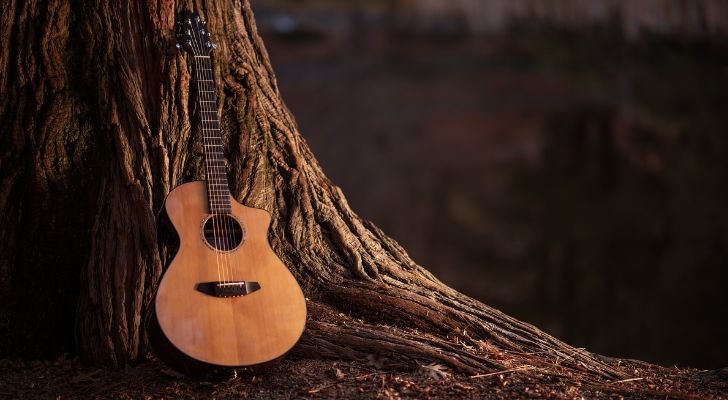
Luthiers have long known that different tonewoods produce distinctly different sounds due to their varying density, stiffness, and internal damping properties. Spruce, the most common top wood, is prized for its balance of strength and resonance; mahogany tends toward a warm, midrange-heavy tone; maple is bright and articulate; while rosewood fingerboards add warmth and complexity to the overtones.
Beyond the wood itself, a guitar’s tone is also shaped by its construction quality, the type and gauge of strings fitted, and — for electric guitars — the choice of pickups and amplifier. The interplay of all these variables is what makes every guitar sound subtly unique.
Modern guitars originated in Spain.

The classical guitar as we know it today was largely defined by Spanish luthier Antonio de Torres Jurado, who in the mid-nineteenth century developed a larger body size, a fan-bracing internal structure, and proportions that are still the blueprint for classical guitars worldwide. His innovations gave the instrument greater projection and tonal depth than its predecessors.
Guitar-like plucked string instruments, however, stretch back much further — ancient Egypt, Mesopotamia, and Greece all had instruments with similar principles, and the oud brought to Spain by Moorish musicians during the medieval period is considered a direct ancestor of the European guitar.
Guitar picks have different thicknesses.
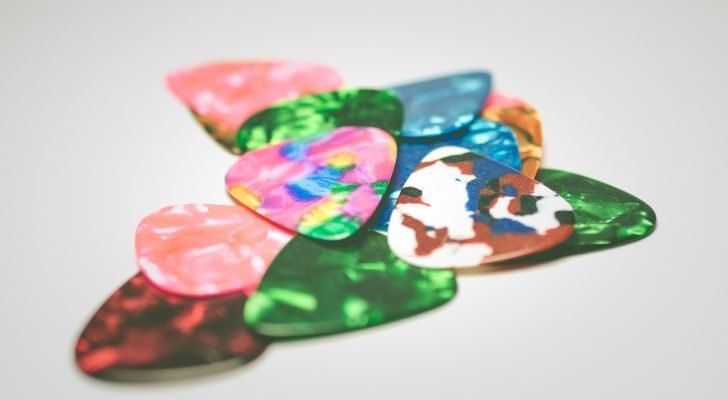
Pick thickness is usually measured in millimetres and grouped into categories from extra-light (around 0.38 mm) to extra-heavy (over 1.5 mm). Thin picks are flexible and forgiving, making them well suited to strumming chords — they bend slightly on contact with the strings, producing a softer attack. Thick picks are rigid, providing more control and a brighter, more defined tone for lead playing and flatpicking.
Beyond thickness, picks also vary in shape (teardrop, triangle, jazz), material (celluloid, nylon, tortex, metal), and surface texture, all of which influence the feel and sound. Many players try dozens of combinations before settling on their preferred pick.
Some guitarists intentionally damage their brand-new electric guitars.

The practice of artificially ageing a guitar is called “relicing,” and it involves deliberately scratching the body, chipping the finish, wearing down the frets and hardware, and even yellowing the plastic parts to make a new instrument look like a decades-old road warrior. It’s particularly popular among players who love the look and feel of vintage guitars but can’t justify (or find) the real thing.
Major manufacturers including Fender offer factory-reliced guitars as a premium product line, complete with artificially worn necks and faded finishes. Done well, a relic job can look uncannily authentic; done poorly, it just looks like someone dropped the guitar down a flight of stairs.
From the physics of soundholes to the artistry of slide technique, the guitar is an instrument that rewards curiosity at every turn. Whether you play every day or just love listening, understanding a little more about how guitars work and how they came to be only deepens the appreciation for the music they make.
Great facts are worth sharing — and we’d say these 15 groovy guitar facts definitely qualify. At Kaleeg, we’re passionate about making learning enjoyable for everyone. If this list hit the mark, explore our other fact collections and keep the curiosity alive!



 ↑
↑