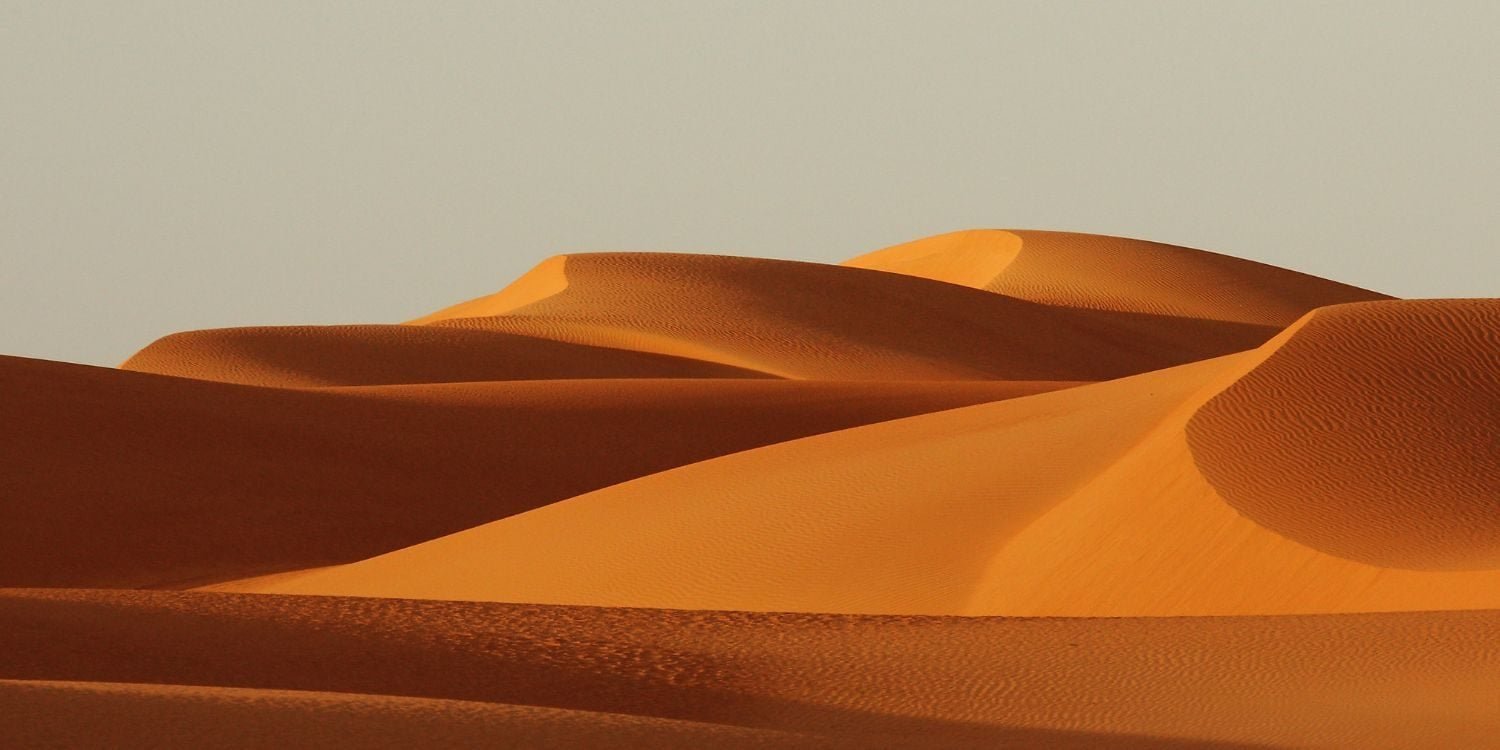
We believe that every subject in the world is interesting once you look closely enough — and Who Lives in The Sahara Desert? is a perfect example. Our Kaleeg team put together several fascinating facts that prove just how remarkable this subject really is.
Was the Sahara always a Desert?
Scientists believe that the area we know as the Sahara desert was covered by the massive Tethys Sea millions of years ago. The shrinking sea gave birth to this desert and left behind the Black, Mediterranean, and Caspian Seas.
According to experts, the loss of this vast body of water led to the gradual reduction of rainfall in this region, contributing to desertification. However, 6,000 years ago, the Sahara desert wasn’t arid, as it still received enough rain to support vegetation.
Fossils uncovered in the Sahara desert tell the story of a land once filled with fascinating creatures, including a 33-foot (10-meter) long Mansourasaurus shahinae dinosaur fossil, which is believed to be 80 million years old.
Researchers have also identified the remains of marine animals in this region, including catfish and tilapia, offering a glimpse into what this area might have looked like.
Who are the people living in the Sahara Desert?
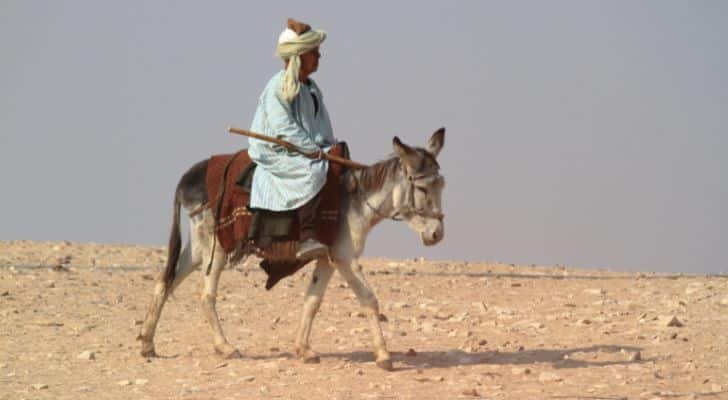
The Sahara desert is home to about 2.5 million people, usually clustered around the few scattered areas that can support plant and animal life. This is a tiny population for such a large expanse of land.
To put this in perspective, look at the United States, which is similar in size but has a much larger population of over 300 million people.
Many tribes living in the Sahara desert practice the nomadic lifestyle that involves traveling from one place to another. The Tuaregs are probably one of the most well-known nomadic tribes in this region, but they’re not the only ones. Other tribes include the Toubou and Moors.
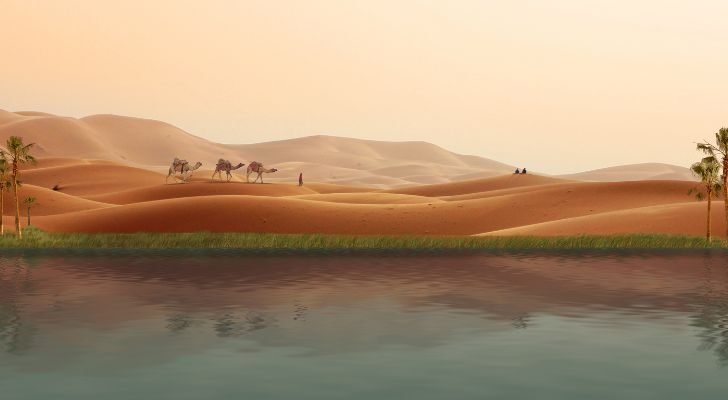
The desert is covered in sand and dust as far as the eye can see. Occasionally, you’ll come across an oasis, a patch of land with thriving vegetation and animals that serves as a valuable rest spot for travelers and a home for settled tribes.
Communities in these regions typically plant strong palm trees around the perimeter to shield their precious water sources and crops from the harsh desert wind and sand. The Sahara desert has about 90 significant oases irrigated by vast underwater resources.
How do people survive in the Sahara Desert?
Temperatures in the Sahara desert can reach incredibly high levels during the day, often exceeding 120°F (49°C). However, at night, the desert can experience significant drops in temperature, sometimes falling below freezing in the winter months of January or February.
The extreme temperature fluctuations in the Sahara desert can make it a challenging environment for human habitation and survival.
People in the Sahara desert wear loose-fitting clothes to deal with the heat. This prevents the rapid evaporation of sweat to reduce water loss. They also wear veils and head wraps that help shield their faces from the dusty winds of the desert.
The harsh temperatures and winds aren’t the only reason the Sahara desert isn’t the most accessible place to live. The region hardly gets any rainfall, averaging 3 to 5 inches (7.6 to 12.7 centimeters) yearly.
The result is that most areas can’t support vegetation making them inhabitable. This is why many communities are located around oases, and the nomadic tribes migrate per the seasons from one region to the next.
What animals and plants can you find in the Sahara Desert?
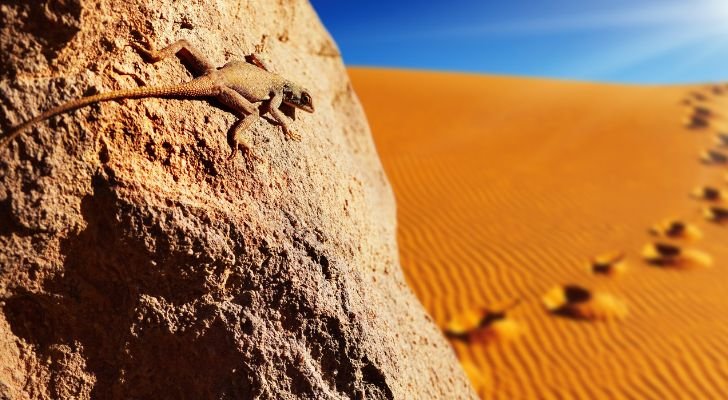
Despite how difficult living in the Sahara desert is, various plants and animals have adapted to these conditions. The plants found here can survive the heat and drought.
Some also have the added ability to tolerate highly salty environments (halophytes). These plants may be found around the saline depressions of the Sahara Desert.
One of the most prominent plants in the Sahara desert is the date palm, which grows as tall as 69 to 75 feet (21 to 23 meters). The caramel-tasting dates these trees produce are a crucial part of the diet in these communities.
Other common plants in the Sahara desert include Laperrine’s olive tree, Saharan cypress, doum palm, tamarisk, desert gourd, and acacia.
Most people associate camels with the Sahara desert, and they’re right. But the Sahara desert has more diverse animal species than you might imagine, including over 100 reptiles, 70 mammals, and 90 birds.
Some interesting animals in this region are the deathstalker scorpion, desert crocodile, African silverbill, hyrax, and African wild dog. Unfortunately, some of the desert animal and plant populations are facing extinction.
The Sahara desert wasn’t always arid. This area was once underneath a large sea and supported thriving flora and fauna. Despite its harsh living conditions, millions call the Sahara desert home.
They’ve adapted their clothing and lifestyle to fit this unique environment. The plants and animals in this area have also changed to enable them to survive.
Great facts are worth sharing — and we’d say these several fascinating facts about Who Lives in The Sahara Desert? definitely qualify. At Kaleeg, we’re passionate about making learning enjoyable for everyone. If this list hit the mark, explore our other fact collections and keep the curiosity alive!


 ↑
↑