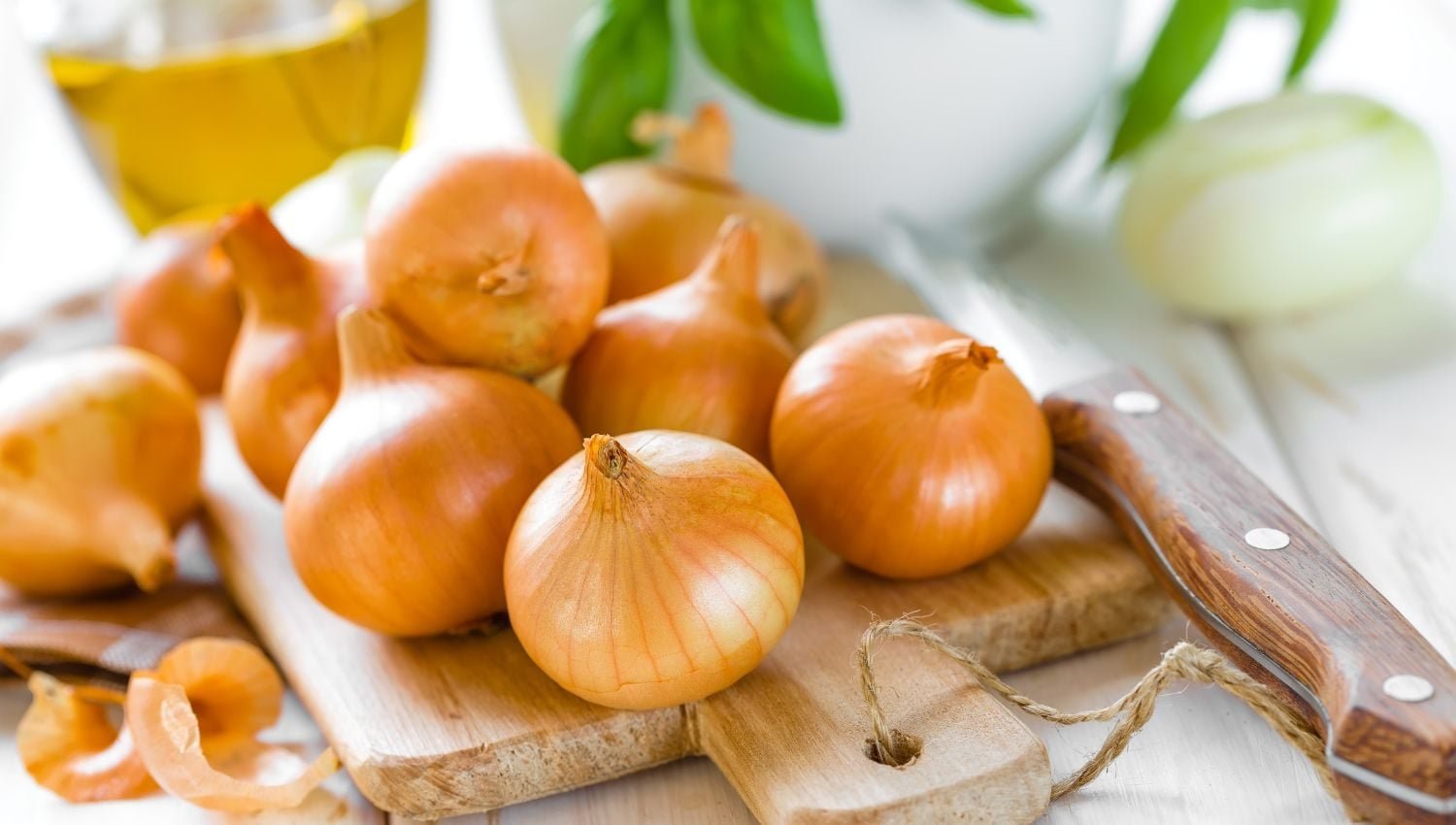
Onions are one of the oldest and most universally used vegetables on the planet, yet most people know surprisingly little about them beyond the kitchen. The Kaleeg team has pulled together 25 genuinely fascinating facts about Onions — no tears required.
Ancient Egyptians revered the onion as a symbol of eternal life, believing its concentric rings represented the nested spheres of the universe. Archaeologists have even discovered traces of onion remains placed in the eye sockets of mummies, including the famous Pharaoh Ramesses IV.
The Romans were enthusiastic advocates of the onion’s medicinal powers. The author and naturalist Pliny the Elder, who lived near Pompeii, documented numerous remedies involving onions — claiming they could cure vision problems, toothaches, and even dog bites when applied correctly.
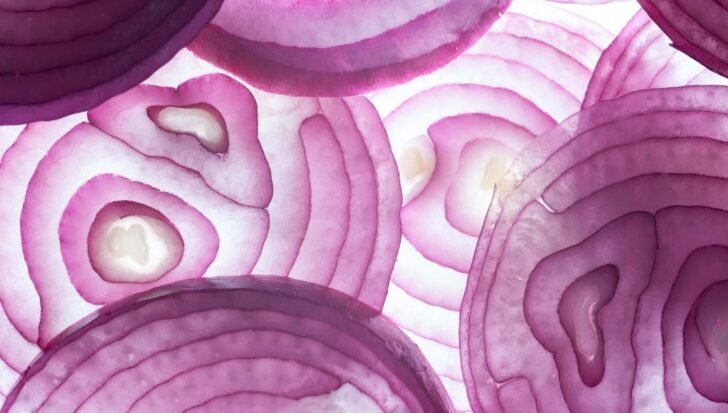
Onion cells are a staple of biology classrooms around the world because their large, clearly defined cell walls make them ideal for first-time microscope users. The transparent epidermal layer is especially easy to prepare as a thin slide, giving students a vivid look at plant cell structure.
In 2008, scientists at the New Zealand Institute for Crop and Food Research successfully developed a genetically modified onion that does not trigger the tearing response when cut. The modification works by silencing the enzyme responsible for producing the lachrymatory compound — though some tasters report the resulting onion has a milder, less intense flavor.
Onions are toxic to many common household pets, including dogs, cats, and rabbits. The compounds in onions — particularly thiosulphates — damage red blood cells in animals, potentially causing a form of anemia. Even small amounts can be dangerous, so it’s important to keep onions well away from your pets’ food.
Proper onion storage is a science in itself. Onions should be kept in a cool, dry, and well-ventilated spot — ideally a mesh bag — and stored away from other vegetables. Their natural moisture-absorbing properties can cause nearby produce like potatoes to spoil much faster than normal.
Beyond their flavor, onions are a genuinely nutritious food. They’re a solid source of vitamin C, B vitamins, potassium, and dietary fiber. They also contain quercetin, a powerful antioxidant and anti-inflammatory compound, which contributes to their reputation as a health-supporting vegetable.
A pair of major studies conducted in China and Puerto Rico in 2019 found a meaningful association between regular consumption of alliums — the plant family that includes onions, garlic, shallots, and leeks — and significantly reduced rates of several types of cancer, including colorectal cancer.
The reason cutting an onion makes you cry is a remarkable piece of chemistry. When you slice through an onion’s cells, sulfur-based compounds react with enzymes to produce a volatile gas called syn-propanethial-S-oxide. When this gas reaches your eyes, it reacts with the moisture there to form a mild sulfuric acid, triggering tears as a defensive response.
There are a few proven techniques for reducing the crying effect. Keeping onions refrigerated before cutting slows down the enzymatic reaction that produces the irritating gas. Alternatively, cutting near a running fan or open window disperses the gas before it can reach your eyes — and some cooks swear by wearing swimming goggles for the trickiest varieties.
The Egyptian walking onion is one of the more unusual plants in the allium family. Rather than producing a flower, it grows a cluster of small bulblets at the top of a tall stem. As these bulblets gain weight, the stem bends until they touch the ground, where they take root and start a new plant — effectively “walking” across the garden over time.
Onion skins have been used as a natural fabric dye for centuries. Yellow onion skins produce warm golden and amber tones, while red onion skins yield softer pinks, rusts, and light browns. The dye bonds well to natural fibers like wool and requires no harsh chemicals, making it a popular choice in traditional and sustainable textile crafts.
Long before synthetic dyes, many European cultures dyed their Easter eggs using onion skins. In Greece, eggs were traditionally boiled together with red onion skins to achieve a deep russet-gold color. In parts of England, onion skin patterns were transferred onto eggs by wrapping them tightly with the skins before boiling.
Companion planting onions and garlic alongside other crops is one of the oldest natural pest-management strategies in agriculture. The sulfur compounds these plants release into the air act as a deterrent for aphids, carrot flies, and a range of other common garden pests, reducing the need for chemical pesticides.
Onion breath is caused by sulfur-containing compounds that are absorbed into the bloodstream during digestion and then released through the lungs. Drinking milk, particularly full-fat milk, has been shown in studies to neutralize some of these compounds effectively. Chewing fresh parsley or mint, or drinking green tea, can also help mask the odor.
A 2002 study published in an Australian dermatology journal found that applying onion extract gel to scars and new skin growths significantly improved their appearance over time. A separate line of research has also explored whether onion juice applied to the scalp may stimulate hair regrowth in people with certain types of alopecia — the results were surprisingly positive, if pungent.
India and China together dominate global onion production, each producing over 20 million tons annually. India is actually the world’s largest producer overall. The United States, by comparison, produces around 3 million tons per year — a respectable figure, but a small fraction of the output from the top two producers.
While European colonists introduced cultivated onion varieties to North America, they discovered that Indigenous peoples had already been foraging and cooking with wild native onions for thousands of years. Several place names across North America, including Chicago — derived from a Native American word meaning “wild onion place” — reflect just how important the plant was to Indigenous culture.
To promote the 2022 Netflix release of “Glass Onion: A Knives Out Mystery,” the artisan ice cream brand Van Leeuwen partnered with Netflix to create a limited-edition caramelized onion ice cream. The flavor, described as surprisingly sweet and savory, was a genuine marketing sensation that had people lining up to try it.
On September 15, 2023, a new Guinness World Record was set for the largest onion ever grown, weighing in at an astonishing 19.7 pounds (8.9 kilograms). The record-breaking specimen demonstrated just how enormous this humble vegetable can become under the right growing conditions.
The town of Tropea in Calabria, Italy, is renowned throughout the country for its sweet red onions, which have protected geographical indication status. In 2019, sculptor Giuseppe Carta created a striking 4.9-foot-tall (1.5-meter) onion sculpture for the town’s annual onion festival, drawing visitors from across Europe to celebrate the region’s prized crop.
In 1971, Soviet cosmonauts aboard the Salyut 1 space station made history by growing and then eating onions in orbit — making the onion the first food ever cultivated and consumed in space. The experiment was a milestone in understanding how plants could be grown in microgravity for long-duration space missions.
Ancient Greek athletes had an unusual pre-competition ritual involving onions. Olympic competitors would eat large quantities of the vegetable, drink onion juice, and rub raw onions over their bodies before competing. They believed this practice would strengthen their muscles and improve their performance — a belief that, while not scientifically validated, speaks to how highly onions were valued in ancient Greek culture.
Onion festivals are a beloved tradition in many parts of the world. In Catalonia, Spain, the annual Calçotada celebrates the calçot — a large, sweet spring onion — with outdoor feasts where attendees grill them over open flames and dip them in romesco sauce. Similar festivals take place in Sicily, Madeira, and across Latin America, reflecting the onion’s deep roots in food culture worldwide.
Before the widespread use of coins and paper money, onions served as a genuine form of currency in parts of medieval Europe. They were valuable enough to be used to pay rent, buy goods, and even settle debts. As recently as the 18th century, peasants in parts of Siberia were still using onions as a medium of exchange in local trade.
From ancient Egyptian burial rites to modern space stations, the onion has played a surprisingly central role in human civilization across the centuries. It’s been currency, medicine, dye, and sacred symbol — all while quietly becoming one of the most essential ingredients in kitchens around the world.
The next time you reach for an onion, remember that you’re handling a vegetable with a history as rich and layered as the vegetable itself.
And that’s a wrap on 25 fascinating facts about Onions! Whether you came in as a curious beginner or a seasoned enthusiast, we hope this list delivered something genuinely new. Head over to our food-drink section for even more curated facts — the learning never stops at Kaleeg.



 ↑
↑