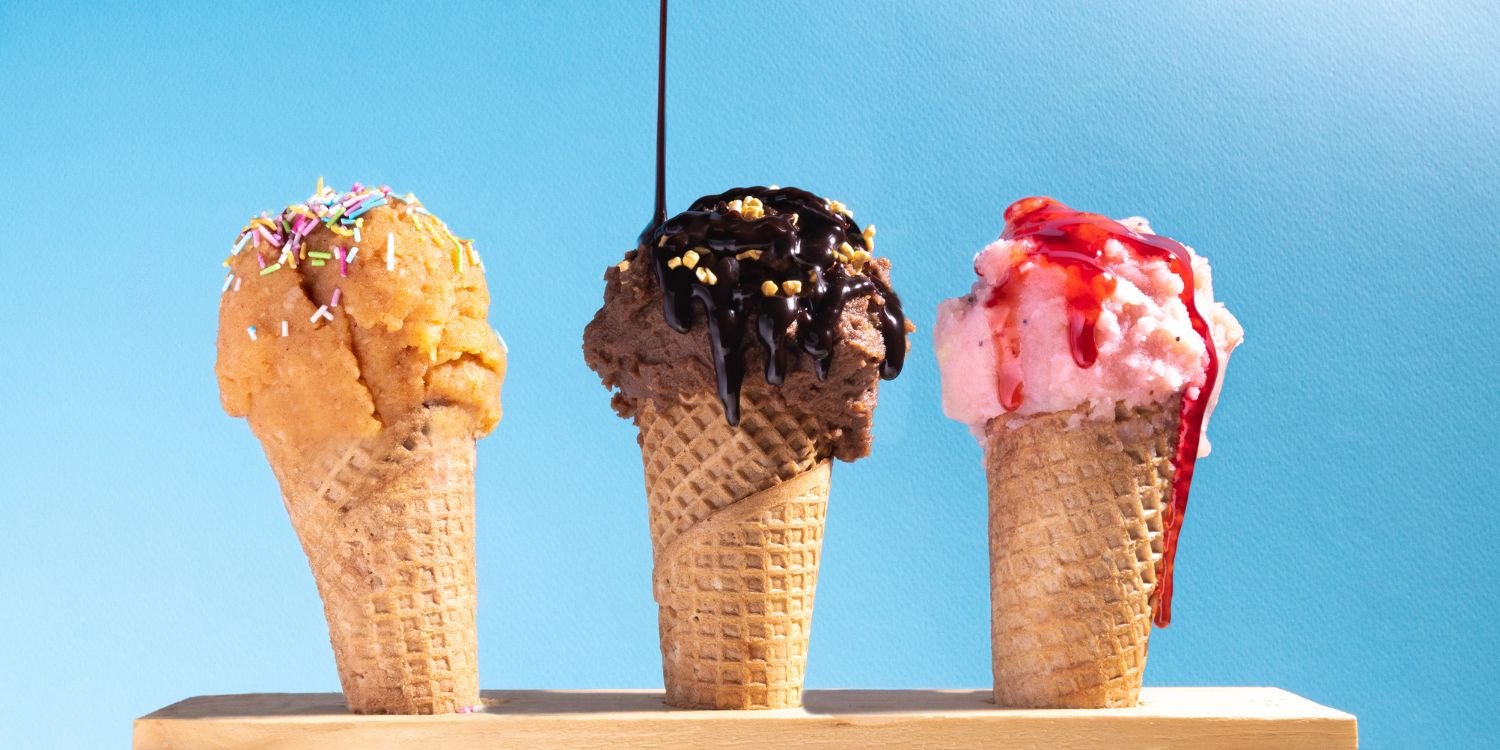
Ice cream has earned its place as one of humanity’s most beloved desserts, but its story goes far beyond the freezer aisle. Here are 25 genuinely fun facts about Ice Cream that are cold, creamy, and absolutely surprising.
Ice cream’s origins trace back to China, where early frozen desserts made from snow, ice, and flavored pastes were enjoyed as far back as the Tang Dynasty. The concept was reportedly brought to Europe by Marco Polo during his 13th-century travels, where it eventually evolved into the frozen dairy desserts we recognize today.
America’s first ice cream parlor opened in New York City around 1790, catering to the city’s elite. Then during Prohibition in the 1920s, ice cream parlors experienced a remarkable boom as they stepped in to replace bars and saloons as the preferred gathering spots for socializing and live music.
Thomas Jefferson is credited with writing down the first ice cream recipe in American history — an 18-step French-style vanilla ice cream that he reportedly learned from his French butler, Adrien Petit. Jefferson served the dessert regularly at Monticello and at official White House dinners, helping to popularize it among American high society.
President Ronald Reagan had a well-documented love of ice cream, and he made it official: in 1984, he designated July as National Ice Cream Month and declared the third Sunday of July National Ice Cream Day, calling on Americans to celebrate with “appropriate ceremonies and activities.”
Kulfi, the dense, richly flavored frozen dessert of the Indian subcontinent, has been enjoyed for nearly 500 years. It is believed to have originated in 16th-century Delhi, where Mughal court cooks flavored thickened reduced milk with pistachios, saffron, cardamom, and rose water, then froze it in metal cones packed in ice and salt.
NASA developed freeze-dried ice cream for the Apollo missions, but the product — which has the texture and crumble of compacted chalk — was mostly disliked by astronauts. Astronaut Mike Massimino memorably described it as feeling “more closely related to a building material than a food.” Today it’s largely a novelty sold at space museum gift shops rather than an actual part of astronaut meal plans.
During World War II, the U.S. Navy went to remarkable lengths to keep sailors supplied with ice cream — including converting an entire concrete barge into a floating ice cream factory stationed in the Pacific. The vessel could produce 10 gallons (about 38 liters) of ice cream every seven minutes and store up to 2,000 gallons (7,600 liters) at a time, serving as a major morale booster for Navy personnel in the region.
Also during WWII, Commander J. Hunter Reinburg found an even more creative solution for his troops on the ground. He modified his plane to carry canned cream and cacao, then flew to an altitude cold enough to freeze the mixture, returning with freshly made ice cream for soldiers stationed on the island of Peleliu — one of the most unconventional uses of a military aircraft in the war.
The ice cream cone has a dual origin story. Italian immigrant Italo Marchiony first patented a waffle mold for making edible cups in New York in 1903. But it was Ernest A. Hamwi, a Syrian immigrant selling waffles at the 1904 St. Louis World’s Fair, who is widely credited with creating the cone as we know it — rolling his flat waffles into cones and passing them to an ice cream vendor at the next booth who had run out of dishes.
Fried ice cream — a scoop of frozen ice cream quickly deep-fried in batter to create a warm, crispy exterior — has delighted dessert lovers for generations. A conceptually related creation, Baked Alaska, involves ice cream encased in meringue and then briefly baked in a hot oven, a technique pioneered by New York chef Charles Ranhofer in the 1860s and perfected at Delmonico’s restaurant.
The first ice cream truck fleet was launched in the 1920s by Ohio confectioner Harry Burt, who attached bells salvaged from his son’s sled to his trucks so children could hear them approaching. The idea proved so popular it spawned an entire industry, and today ice cream truck jingles are a beloved part of summer soundtracks in countries around the world — from “Frère Jacques” in France to “London Bridge is Falling Down” in the UK.
Black ice cream became a social media sensation in the mid-2010s, with its dramatic dark hue coming from unusual natural ingredients such as activated charcoal, black garlic, or squid ink depending on the maker. The striking visual made it irresistible for Instagram, driving queues around the block at shops offering it in cities like New York and London.
McDonald’s ice cream machines have a legendary reputation for being out of service at the worst possible moments. The frustration became so widespread that developer Rashiq Sadik built McBroken.com in 2020 — a real-time interactive map showing which McDonald’s locations in the US have functioning soft-serve machines, allowing ice cream fans to plan their visits accordingly.
New Zealand holds the title of highest per-capita ice cream consumption in the world, with each person consuming an average of around 7.4 gallons (28 liters) per year. This passion for ice cream is supported by New Zealand’s thriving dairy industry and a culture that embraces the dessert year-round, not just in summer.
South African food tech company Gourmet Grubb produces a genuinely unusual alternative dairy ice cream using “EntoMilk” — a high-protein, high-fat milk substitute made by blending black soldier fly larvae. The resulting ice cream is flavored with ingredients like spiced peanut butter and dark chocolate, and is marketed as a more environmentally sustainable alternative to conventional dairy-based ice cream.
The ice cream soda — known today as an ice cream float — was invented in Philadelphia in 1874 by Robert Green, who ran a beverage stand at a soda fountain exhibition. According to the popular account, Green ran out of ice to cool his flavored cream sodas and improvised by borrowing ice cream from a neighboring vendor, accidentally inventing one of the most popular dessert drinks in history.
On July 24, 1988, the Canadian dairy company Palm Dairies Ltd. created what was at the time the world’s largest ice cream sundae, weighing an extraordinary 54,917 pounds (24.91 tonnes), assembled in Edmonton, Alberta. The record-breaking dessert required industrial-scale equipment and a massive team of people to build.
The ice cream sundae has a quirky origin tied to 19th-century American “blue laws” — religious restrictions that banned the sale of soda water on Sundays because it was considered an indulgent, frivolous pleasure. Ice cream shop owners responded by serving ice cream with chocolate sauce instead of soda, calling the new creation a “Sunday soda” and eventually spelling it “sundae” to avoid any religious connotations.
In 2007, the famous New York restaurant Serendipity 3 unveiled the “Frozen Haute Chocolate” — a $25,000 ice cream sundae made with a blend of 28 rare cocoas, topped with edible 23-karat gold leaf, and served with a golden spoon that the diner got to keep. The dessert entered the Guinness World Records as the world’s most expensive ice cream sundae, with proceeds benefiting children’s charities.
The modern ice cream scoop was patented in 1897 by Alfred L. Cralle, an African American inventor from Pittsburgh. His original design produced conical portions rather than the spherical scoops we’re familiar with today, but the core mechanical principle — a lever-operated bowl that released the ice cream cleanly with one hand — is essentially the same mechanism used in ice cream scoops to this day.
The popsicle was accidentally invented in the winter of 1905 by Frank Epperson, an 11-year-old in San Francisco who left a cup of soda powder and water on his porch with a stirring stick in it. The mixture froze overnight, and when Frank pulled it out by the stick the next morning, the modern frozen treat was born — though he didn’t patent the invention until 1923, when he called it the “Epsicle” before the name evolved into “popsicle.”
Across Mexico, paleteros are a beloved institution — street vendors pushing insulated carts through neighborhoods and at events, selling paletas (traditional Mexican ice pops) in an extraordinary range of flavors. Beyond the expected fruits, Mexican paleta flavors can include tamarind, mango with chili powder, hibiscus, cucumber with lime, and even savory varieties made with cheese and cream, reflecting the country’s rich tradition of combining sweet, sour, spicy, and salty flavors.
Brain freeze — the sharp, sudden headache that strikes when you eat ice cream too quickly — is caused by the rapid cooling of the roof of the mouth (the palate), which triggers the sphenopalatine ganglion, a bundle of nerve cells nearby. The brain interprets the rapid temperature change as a sign of overheating and dilates blood vessels to warm the area, causing the characteristic brief but intense pain. The quickest known remedy is pressing your tongue firmly against the roof of your mouth to warm it back up.
A 2016 study at Kyorin University in Japan found that participants who ate ice cream immediately after waking up showed measurably better alertness and processing speed in cognitive tests compared to those who didn’t. The researcher suggested the mental boost might be linked to the cold temperature stimulating the brain rather than any specific nutritional content — but the finding made headlines around the world, giving people everywhere a scientific-sounding excuse to eat ice cream for breakfast.
Ice cream is a modest but real source of nutritional value, providing meaningful amounts of calcium for bone health, vitamin A for immune function and vision, and vitamin B-12 for red blood cell production and neurological health. Of course, it also contains significant sugar and saturated fat, so it’s best enjoyed as an occasional treat — but at least when you do indulge, you’re getting something back.
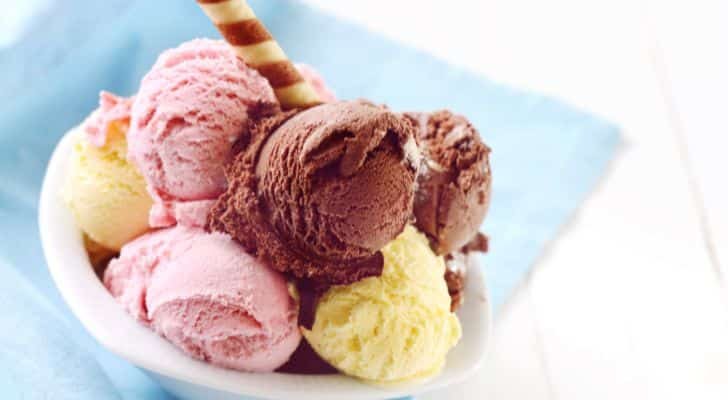
From ancient Chinese courts to floating Navy factories to Instagram-worthy black cones, ice cream has proven itself one of the most inventive and culturally resonant foods humans have ever created. The next time you reach for a scoop, you’re participating in a tradition that spans centuries, continents, and some truly creative moments in culinary history.
Great facts are worth sharing — and we’d say these 25 fun facts about Ice Cream definitely qualify. At Kaleeg, we’re passionate about making learning enjoyable for everyone. If this list hit the mark, explore our other fact collections and keep the curiosity alive!



 ↑
↑