
We believe that every subject in the world is interesting once you look closely enough — and World Television Day | November 21 is a perfect example. Our Kaleeg team put together several fascinating facts that prove just how remarkable this subject really is.
A Brief History of Television
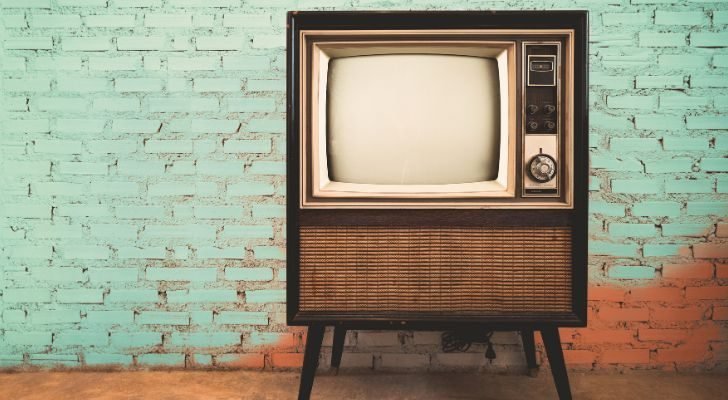
Believe it or not, the first televisions were mechanical and were invented around 1884! They were completely impractical, so they were far from popular.
Their popularity finally rose to some degree on March 25, 1925, when an inventor from Scotland, John Baird, made improvements to mechanical TV designs to make them commercially available.
Even that wasn’t too successful, though, since Baird’s mechanical television was still considered too complex for the average person.
Two years later, on September 7, Philo Farnsworth invented the first patented electrical TV.
So, although Baird is the Father of Television, it’s Farnsworth we have to thank for the modern TVs we have in our homes today.
Speaking of modern TVs, the difference between this type of television and those used during the mid to late 1900s is enormous.
For example, all televisions back then were bulky. But now? Heck, some TVs are as thin as your mobile phone!
How to Celebrate World Television Day

Binge-watch TV.
Cancel your plans and binge your favorite Netflix show, immerse yourself in documentaries, or hold a movie marathon – whatever floats your boat!
With so many streaming platforms and content more available than ever, the only problem you’ll have is choosing what to watch!
Watch some foreign TV shows and films.
Why not take today as an opportunity to go outside your comfort zone and try watching something different?
For example, if you only watch Western films, watch anime for a change. If that’s too much, you can change the genre – like switching action films for rom-coms.
Host a TV trivia night.
Make things fun and interesting when bonding with your family or friends after watching television by hosting a trivia night related to TV shows or movies.
For TV shows, like The Big Bang Theory, you could quiz your friends on which episode a particular event occurred.
On the other hand, a question for a movie, such as The Lord of the Rings, could be about where it was filmed.
World Television Day FAQ

Why is World Television Day celebrated on November 21st?
World TV Day takes place on this day because of the UN’s first World Television Forum, which ran from November 21 to November 22, 1996.
And if you’re wondering, the event was basically about the role of TV in our society and how it can be used to promote understanding and cooperation among nations.
Who started World Television Day?
The United Nations established this special holiday 29 years ago on December 17, 1996.
Its purpose was to acknowledge how watching television has changed our lives, particularly how we think and make decisions, as it made us aware of major international issues.
How else can I celebrate World Television Day?
Besides the three ways mentioned earlier, you can also celebrate World Television Day by raising awareness about the memorable holiday on numerous social media platforms, like Facebook and X (formerly Twitter).
Use hashtags or infographics if you wish. Or, even better, share your favorite TV memories on social media! And hey, why not use today as an excuse to upgrade your old TV?
5 Fast Facts About Televisions

- TV, the abbreviation for television, only came up in the 1940s. Television itself is a word made up of the Greek terms “tele” (distance) and “vision” (sight).
- While some television broadcasting stations shifted from monochrome to color display in 1953, it wasn’t until the 1960s that color televisions became prevalent. And, as it turns out, using color televisions was beneficial for advertising – this compelled more and more TV networks to make black-and-white television a thing of the past.
- On July 1, 1941, people saw the very first television commercial, which advertised Bulova watches, during a baseball game between the Brooklyn Dodgers and Philadelphia Phillies. It lasted 10 seconds and only cost the company around $4-9 (around $80-180 today)!
- “Dead pixel” is a term used to describe tiny dots (which are typically black) on a TV screen due to manufacturing defects or screen damage. There are instances when the dead pixels go away without you doing anything. But sometimes, you must download an app or replace the screen to remove the dead pixels.
- The first TV remote control wasn’t wireless. It was created by Zenith Radio Corporation in 1950 and was referred to as the “Lazy Bone.” It wasn’t until five years later that Zenith came out with a wireless TV remote control.
Television has been a crucial part of our daily lives to the point that almost all households worldwide have one. It informs us of the world’s goings-on and entertains us.
So, there’s no doubt that we should all celebrate World Television Day. However, will television soon become obsolete with more people watching on mobile?
Some say yes, and some say no. I guess only time will tell!
Kaleeg Editorial Note: We hope these several facts about World Television Day | November 21 sparked your curiosity! Our team works hard to bring you accurate, engaging fact lists across every topic imaginable. If you loved this article, explore more in our fact library — and don’t hesitate to get in touch if you’d like to suggest a topic!




 ↑
↑